If you’re searching for a clear, actionable competitive game mechanics guide, you’re likely looking to sharpen your edge, understand core systems better, and translate in-game knowledge into real wins. Competitive gaming isn’t just about fast reactions—it’s about mastering mechanics, reading patterns, optimizing setups, and adapting faster than your opponents.
This article is built to break down the essential mechanics that separate casual play from high-level performance. From movement optimization and timing windows to resource management and meta awareness, we focus on the systems that consistently decide matches across today’s most popular competitive titles.
Our insights are grounded in ongoing analysis of esports trends, tournament formats, and evolving gameplay strategies across multiple competitive scenes. We study how top players approach mechanics and how rule sets influence strategy—so you get guidance that reflects what actually works in competitive environments.
By the end, you’ll have a clearer understanding of the mechanics that matter most—and how to apply them effectively in real matches.
Defining the Core: The Rules That Shape Every Match
At its simplest, game mechanics are the rules and systems that govern how players interact with a game and how the game responds. Think of them as the invisible contract between player input and on-screen outcome. Press a key, click a mouse, input a combo—the mechanic decides what happens next.
There’s a useful distinction between Core Mechanics and Supporting Mechanics. Core mechanics are the primary actions you repeat constantly: movement, shooting, attacking, or resource gathering. Supporting mechanics are secondary systems—crafting, inventory management, mini-maps—that enhance or modify those primary actions.
In FPS titles like Valorant or CS:GO, time-to-kill (TTK) defines how quickly players are eliminated. Recoil patterns dictate how weapons behave under sustained fire. Movement acceleration affects strafing duels. Agent abilities add layered decision-making. Some argue raw aim matters more than mechanics—but TTK and recoil tuning often shape the meta just as much (sometimes more than star players admit).
In MOBAs like League of Legends or Dota 2, last-hitting determines gold income, cooldown management controls ability timing, vision control shapes map safety, and jungle pathing optimizes early-game tempo. I’ll admit, even analysts debate which of these truly defines “skill expression.” It’s not always clear-cut.
Fighting games such as Street Fighter hinge on frame data (how fast moves start and recover), hitboxes (the invisible zones where attacks connect), cancel systems, and meter management. These systems reward precision at a granular level.
For deeper spatial fundamentals, explore advanced positioning tactics for team based shooters.
Ultimately, mechanics determine fairness, depth, and competitive integrity.
If you’re building your own competitive game mechanics guide, start with the core loop first (pro tip: complexity should support mastery, not obscure it).
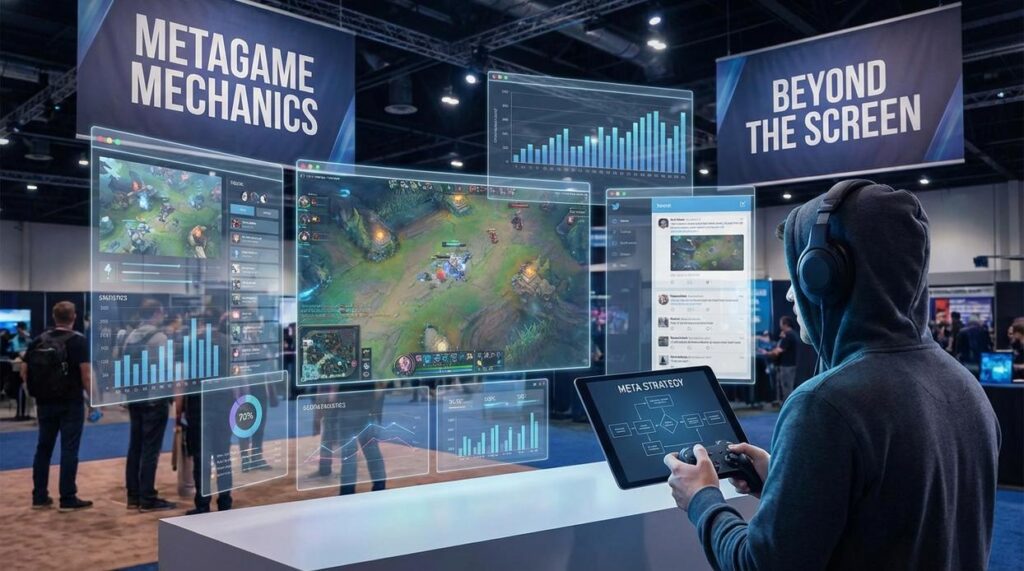
The Unwritten Rules: How Mechanics Forge the Metagame

Ask any competitive player what really decides matches and you’ll hear the same thing: “It’s not just skill. It’s the META.”
The metagame (often shortened to “meta”) refers to the dominant strategies that emerge from a game’s most powerful or efficient mechanics. In plain terms, it’s what wins most consistently right now. When a specific mechanic delivers disproportionate value, players naturally optimize around it. As one team captain put it during a scrim, “If the ultimate wins fights, we build everything around the ultimate. SIMPLE.”
Consider a character with a fight‑swinging ultimate ability. If that ability can wipe a team every 90 seconds, entire compositions shift to protect, charge, and combo it. Likewise, a weapon with one‑shot potential forces slower pacing and defensive positioning. Suddenly, strategy isn’t about creativity—it’s about respecting THAT mechanic.
Some argue metas “kill variety.” A frustrated player once told me, “Everyone just copies what pros run.” Fair. But efficiency naturally rises to the top in competitive systems (just look at chess openings). The meta isn’t oppression—it’s optimization.
To identify impactful mechanics in your own title, use this competitive game mechanics guide framework:
- The Action Economy: Which actions deliver the most value per second? High-damage bursts or crowd control often dominate.
- Resource Gates: What limits power—cooldowns, ammo, mana? These create exploitable windows. “They used ult—GO NOW!” is classic resource timing.
- Information Asymmetry: Vision, fog of war, sound cues. The team that controls information controls tempo.
Master these levers and you’re not just playing the game—you’re playing the meta.
Your Competitive Edge: Turning Knowledge into Victory
Most players consume guides. Fewer translate them into wins.
The real edge isn’t knowing more—it’s applying knowledge faster and more precisely than your opponent. That gap between theory and execution is where matches are decided.
First, understand the split between Micro and Macro mechanical skill.
Micro mechanics refer to physical execution—aim precision, animation cancels, combo timing, recoil control. It’s the muscle-memory layer. Think of landing a frame-perfect combo under pressure (the esports equivalent of hitting the final note in a Guitar Hero solo).
Macro mechanics are the strategic application of those abilities—rotations, objective trades, wave manipulation, cooldown tracking. Macro asks: When should you use your mechanics, and why here instead of elsewhere?
Many competitors obsess over Micro while ignoring Macro. They grind aim trainers for hours but fail to rotate when their mechanical advantage is strongest. That imbalance is where disciplined players quietly pull ahead.
To systematically improve, use this process:
- Utilize Training Modes: Enter practice tools to isolate mechanics. Test damage thresholds, combo timings, jump spots, or projectile travel times. Define exact breakpoints—what level, what item, what cooldown window secures the advantage.
- Conduct VOD Reviews: Analyze your replays and pro matches. Pause frequently and ask, Why was this decision made given the mechanics available? Look for missed punish windows or wasted cooldowns.
- Engage in Theorycrafting: With teammates, design strategies that exploit a specific mechanical edge—stronger early duels, faster objective burn, superior mobility.
Most guides stop at “improve your mechanics.” A true competitive game mechanics guide should also teach mechanical leverage—identifying when your skill expression creates unavoidable pressure.
Top-tier players aren’t just sharper. They’re analytical. They test assumptions, quantify advantages, and build repeatable systems.
Execution wins fights. Analysis wins championships.
Mastering the Competitive Edge
You came here to sharpen your understanding of high-level play, and now you have a clearer path forward. From core strategies and esports team dynamics to smarter tournament setups, you’ve seen how every detail can influence performance. That frustration of knowing you could play better—but not knowing exactly how—is no longer holding you back.
The difference between average and elite players comes down to execution, preparation, and mastering every layer of the competitive game mechanics guide you’ve just explored. When mechanics, strategy, and structure align, wins stop feeling random and start feeling repeatable.
Now it’s time to act. Review your current approach, tighten your mechanics, refine your setups, and apply these strategies in your next match or event. Thousands of competitive players rely on our proven insights to level up faster and compete smarter.
Don’t stay stuck at the same rank. Start implementing what you’ve learned today and turn your preparation into performance.