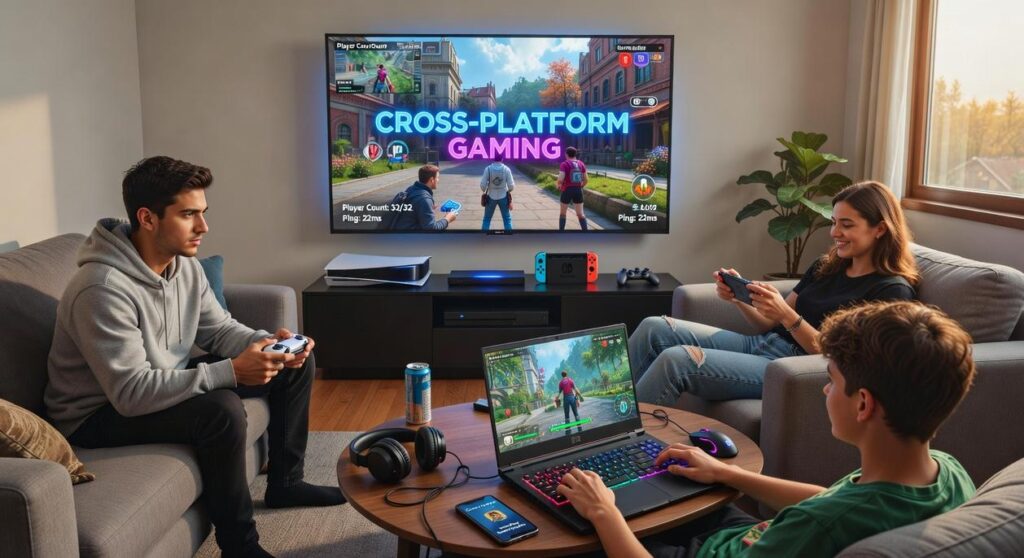
If you’re searching for clear, practical insights into cross-platform multiplayer gaming, you’re likely trying to understand how it works, which games truly support it, and how to get the best competitive or casual experience across devices. With console, PC, and mobile ecosystems constantly evolving, it can be difficult to separate marketing claims from actual performance, compatibility, and gameplay balance.
This article breaks down what players need to know right now—from technical requirements and matchmaking systems to competitive fairness and communication tools. We also explore how cross-platform functionality impacts esports events, private tournaments, and community-hosted matches.
To ensure accuracy, we’ve analyzed current game updates, reviewed developer patch notes, and examined real tournament setups to see how cross-platform systems perform in live environments. Whether you’re a casual player looking to squad up with friends on different devices or a competitive gamer seeking every edge, this guide will give you clear, actionable insights you can rely on.
Breaking Down Barriers: How Crossplay Unites the Gaming World
Ever tried to squad up, only to realize your friend owns a different console? Frustrating, right? That’s where cross-platform play—often called crossplay—changes everything. It’s the tech that lets players on PC, Xbox, PlayStation, or Switch share the same online matches.
In this guide, you’ll learn:
- What crossplay actually means
- The real benefits for your gaming circle
- The challenges developers face
- Which top titles lead cross-platform multiplayer gaming
The biggest win? Bigger communities, faster matchmaking, and zero platform drama. What was once a bonus feature is quickly becoming the new standard.
Defining the Connected Ecosystem: Crossplay, Cross-Progression, and Cross-Gen
At its core, crossplay means a PlayStation player, an Xbox player, and a PC player competing in the same online match. That’s cross-platform multiplayer gaming in action—one shared lobby, no matter the hardware. If you’ve ever wondered why you can squad up with a friend on another console, this is why.
To understand the connected ecosystem, you need to separate similar terms. Cross-progression means your account data—unlocks, skins, levels, stats—travels with you from console to PC and back. Log in elsewhere, and your progress is waiting (no starting from scratch).
Cross-gen play, meanwhile, keeps players within the same console family connected, like PS4 users playing with PS5 users.
So why wasn’t this always standard? Historically, technical barriers, separate network infrastructures, publisher agreements, and strict platform policies made cooperation difficult. Different systems simply weren’t built to talk to each other seamlessly.
The Unified Battlefield: Major Benefits of Cross-Platform Gaming

First and foremost, cross-platform multiplayer gaming tears down the invisible walls that once split friend groups apart. No more “Sorry, I’m on PlayStation” excuses. Whether your squad plays on console, PC, or handheld, everyone drops into the same lobby. It’s the Avengers assembling—minus the licensing drama.
Just as importantly, unified servers mean faster matchmaking and healthier lobbies. When player pools merge, queue times shrink and skill diversity improves. According to industry reports from Epic Games and Activision, enabling crossplay has significantly reduced wait times in major titles (Epic Games Newsroom, 2023). In other words, less staring at loading screens, more actual gameplay.
On top of that, games simply last longer. Fragmented communities often fade on less popular platforms, but shared ecosystems keep titles alive for years. Think of it like a long-running TV series that survives because everyone tunes in, not just one network’s audience.
Finally, esports gets a serious power-up. Larger, inclusive tournaments create deeper talent pools and broader audiences. Competitive scenes thrive when skill—not hardware—defines greatness.
And if you’re curious how this evolution connects to streaming tech, check out the rise of cloud gaming services what players should know. The battlefield is changing—and everyone’s invited.
The Crossplay Conundrum: Balancing a Mixed Playing Field
I used to think turning on cross-platform multiplayer gaming was a no-brainer. More players, faster queues, bigger community. Simple, right? I was wrong.
Challenge 1: The Input Disparity
The biggest flashpoint is mouse-and-keyboard precision versus controller ergonomics. A mouse offers pixel-level accuracy, while controllers rely on aim assist—software that subtly slows or “magnetizes” crosshairs near targets. I once dismissed aim assist complaints as overblown. Then I watched a tournament devolve into arguments about “artificial advantage.” Lesson learned: balancing inputs isn’t math—it’s perception.
Challenge 2: Performance Gaps
High-end PCs can push 240 FPS, while last-gen consoles may struggle at 30–60 FPS. Higher frame rates mean smoother tracking and faster reaction times (studies show increased FPS can improve response timing in competitive play). I ignored this in early events—and console players noticed.
- Frame rate affects reaction windows
- Visual clarity impacts target tracking
- Hardware equality shapes trust
Challenge 3: Update Parity
Patches must pass certification through Sony, Microsoft, Nintendo, and Steam. I once scheduled a tournament assuming simultaneous updates. One platform lagged. Chaos.
Challenge 4: Cheating and Toxicity
Opening PC lobbies raised fears of hackers. While anti-cheat improves yearly, community trust is fragile. The mistake? Underestimating that fear. The fix? Transparent moderation and consistent enforcement.
Your Next Cross-Platform Adventure: 5 Games That Do It Right
Not all crossplay is created equal. Some games treat it like a checkbox feature. Others build their entire ecosystem around it. If you’re looking for seamless cross-platform multiplayer gaming, these five titles show how it should be done—and why it matters for your experience.
Fortnite
The game that forced the industry’s hand. When Epic Games pushed for unified lobbies across consoles, PC, and mobile, it proved a shared player base could be both stable and wildly profitable (Epic reported over 350 million registered players in 2020, per company statements). The real benefit? Faster matchmaking and playing with friends regardless of hardware.
Call of Duty: Warzone & Modern Warfare
Big-budget polish meets practical flexibility. Crossplay is enabled by default, but you can filter matchmaking by input type. That’s crucial if you’re worried about mouse-and-keyboard advantages (a common concern in competitive shooters). Pro tip: Check your input settings before ranked sessions to avoid mismatched lobbies.
Apex Legends
Fast-paced and squad-focused, Apex thrives on a massive shared pool of players. According to EA earnings reports, Apex has surpassed 100 million players globally. Large pools mean tighter skill-based matchmaking and less waiting around.
Minecraft
The gold standard for family accessibility. Whether on console, PC, or mobile, players build together in the same persistent worlds. It’s simple, stable, and incredibly inclusive (yes, even your cousin on a tablet can join).
Rocket League
A rare case where controller is king across platforms. Because most competitive players prefer controllers anyway, balance feels natural. No drama—just cars playing soccer, as it should be.
If you want fewer barriers and fuller lobbies, start here.
The future is connected, and crossplay is no longer a bonus feature tucked into patch notes. It is the baseline expectation for any major multiplayer launch. For years, divided friend groups were the final boss of online gaming. Now, that wall is crumbling, and the industry is stronger for it. So what comes next? Seamless cross-progression should follow, letting your progress travel with you across devices without friction. As cross-platform multiplayer gaming becomes standard, smart players will check for it before buying. In other words, treat connectivity as a core feature, not a nice-to-have. Expect more unified ecosystems ahead. Soon.
Level Up Your Multiplayer Experience
You came here to understand how to get the most out of today’s connected gaming world — and now you have the roadmap. From smarter tournament setups to stronger team coordination and the rise of cross-platform multiplayer gaming, you’ve seen how the right strategies can transform casual sessions into competitive advantages.
The real frustration isn’t a lack of games — it’s missed opportunities. Missed wins because of poor coordination. Missed growth because you weren’t leveraging the right setups. Missed community engagement because your platform strategy wasn’t optimized.
Now you know better.
The next step? Put these strategies into action. Refine your setup, align your team, and stay ahead of emerging multiplayer trends. If you’re serious about dominating your lobbies and hosting smoother, more competitive sessions, start implementing these insights today.
Thousands of competitive players and organizers trust our gaming insights to sharpen their edge. Don’t get left behind while others level up — apply what you’ve learned now and turn every match into a smarter, stronger performance.