
If you’re searching for clear, up-to-date insights on competitive gaming, you’re likely trying to sharpen your strategy, understand the latest esports shifts, or set up a tournament that runs flawlessly. This article is built to meet that goal directly—breaking down current trends in esports team developments, core gameplay strategies, tournament formats, and practical hosting tips that actually work.
Competitive gaming evolves fast. New metas emerge, roster changes shift power rankings, and understanding esports bracket structures can be the difference between a smooth event and a logistical nightmare. Whether you’re a player, organizer, or dedicated fan, staying informed gives you a real edge.
Our content is grounded in close analysis of active tournaments, team performances, and proven event setups across the gaming landscape. You’ll find actionable insights—not surface-level commentary—designed to help you compete smarter, organize better, and stay ahead in today’s fast-moving esports environment.
Choosing the Right Battlefield: A Guide to Tournament Structures
Picking a tournament format is like choosing the rules of a sport before kickoff—get it wrong, and even the best players feel shortchanged. Single elimination is a lightning strike: quick, dramatic, unforgiving. One loss and you’re out. Double elimination offers a safety net, like a hero’s second life in an RPG. Round-robin? That’s a marathon, testing endurance over time.
Understanding esports bracket structures helps avoid chaos, delays, and viewer confusion. Some argue any format works if players are skilled enough. But structure shapes outcomes. The right setup ensures fairness, hype, and competitive integrity.
The Brutal Gauntlet: Single-Elimination Bracket
The single-elimination bracket is the purest pressure cooker in competitive gaming. One loss, and you’re out. No safety net. No redemption arc. Just win and advance until a single champion remains.
Here’s how it works in practical terms. Players are placed into a seeded bracket—seeding meaning competitors are ranked beforehand based on skill, past results, or qualifiers. Matchups typically follow a structured format like 1 vs. 16 and 8 vs. 9. This design rewards higher seeds by pairing them against lower-ranked entrants early on (at least in theory).
For organizers, this is gold. It’s fast, clean, and scalable for large events. Spectators also love it because the stakes are obvious every round. There’s no complicated math—just survive and advance.
But let’s address the downside. Critics argue it’s unfair. One bad matchup, one lag spike, one off game—and a top contender is gone. They’re not wrong. That’s why accurate seeding is critical in esports bracket structures.
Best for:
- Large open qualifiers
- Fast-paced fighting games like Street Fighter
- Final playoff stages
Pro tip: If you’re hosting, double-check seeding logic before publishing brackets—it prevents early-round controversy.
The Path of Redemption: Double-Elimination Bracket
A double-elimination bracket is exactly what it sounds like: you’re not out until you’ve lost twice. The format splits competitors into an Upper Bracket (undefeated players) and a Lower Bracket (players with one loss). Lose once, and you drop down. Lose again, and you’re done. It’s a built-in safety net—because even the best teams have off days.
The proof is in the results. At The International 2017, Team Liquid fought through the lower bracket and won the entire event after an early loss—a run widely cited as one of esports’ greatest comebacks. Across premier events in Dota 2 and VALORANT, lower-bracket finalists regularly reach Grand Finals, demonstrating how the system rewards consistency over luck.
Then there’s the Grand Finals twist. The Upper Bracket winner often has an advantage: sometimes a one-map lead, or the power to force a second best-of series if they lose the first (a “bracket reset”). Statistically, teams entering from the Upper Bracket win championships more often, reflecting the value of staying undefeated longer.
Critics argue it’s too long and complicated—and they’re right. Broadcast schedules stretch, and casual viewers can get confused (it’s not exactly March Madness simple). But if competitive integrity matters most, double-elimination remains king. For deeper comparisons, explore different esports bracket structures.
Every Team, Every Match: The Round-Robin Format
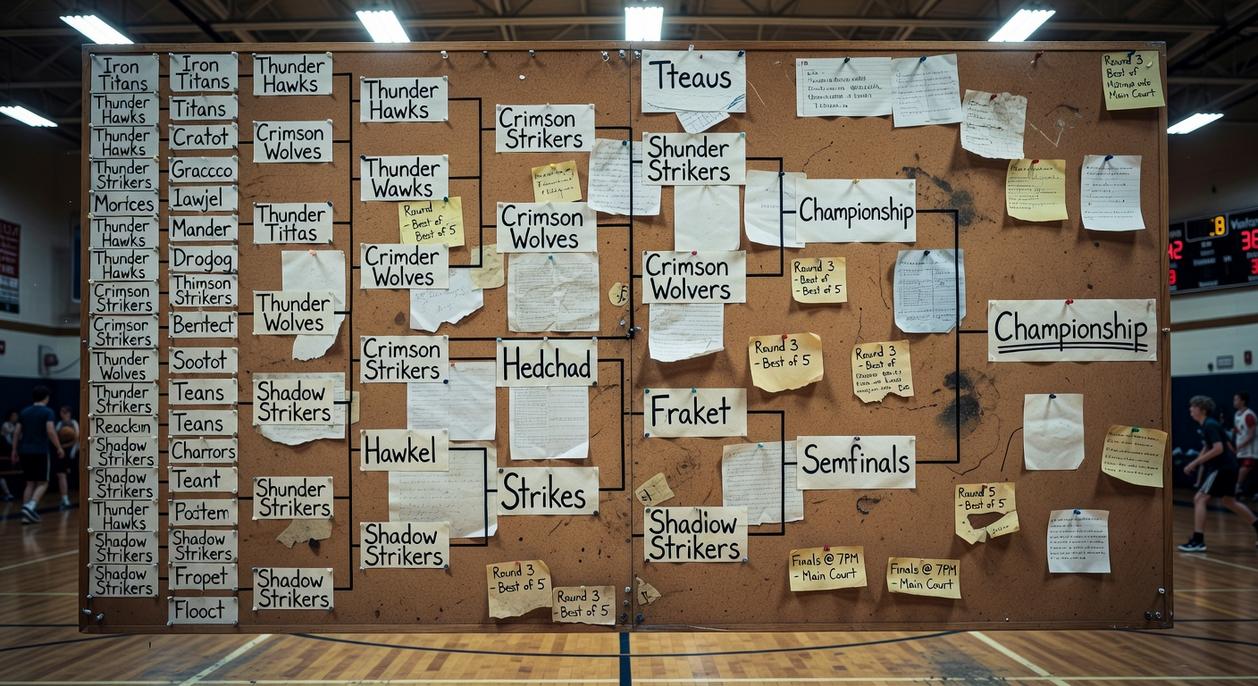
How It Works: In a round-robin format, every competitor faces every other team at least once, and standings are decided by win-loss records. Simple on paper, brutal in execution.
I personally love it because it rewards consistency over flash. No lucky upset run like in single-elimination drama. If you top the table, you earned it.
But here’s the catch: ties. When multiple teams finish with identical records, clear tie-breaker rules matter. Head-to-head results, map differential, or even strength of schedule can decide who advances. Without structure, chaos follows (and Twitter melts down).
Pros:
- Most accurate measure of overall strength.
- Guarantees every team a set number of matches.
Cons:
- Time-consuming and logistically heavy, especially with large fields.
That’s why it shines in league play like the LCS or structured group stages before esports bracket structures. Hosting one? Review the essential equipment checklist for hosting lan tournaments first. Trust me, preparation is everything.
Still, I’d choose it for fairness over spectacle any day of the week. Consistency builds true champions over time. Period.
The Equal Footing Approach: Swiss System
The Swiss System is a non-eliminating format where players face opponents with the same win-loss record each round. If you’re 1–0, you play another 1–0 team; if you’re 0–1, you meet someone else fighting to stay alive. Think of it as skill-based matchmaking before the finals even begin (ranked mode energy, but offline).
How It Works: Instead of everyone playing everyone, a set number of wins—say three—secures advancement, while a set number of losses sends you home. It’s efficiency over exhaustion.
Swiss vs Single-Elimination: In traditional esports bracket structures, one bad day can knock out a favorite. Swiss, by contrast, offers recovery room. Critics argue it’s confusing for casual viewers who struggle to track shifting pairings. Fair point. But the trade-off is fewer one-sided stomps and more balanced rounds.
Best suited for massive open events—Counter-Strike majors, Rocket League qualifiers, or Hearthstone tournaments—where hundreds enter but only the sharpest rise.
Mixing It Up: Hybrid Tournament Structures
Hybrid formats blend multiple esports bracket structures into one event. Think of it as a tournament remix—less predictable than a straight knockout, but cleaner than an endless league season (because nobody wants a three‑month finale).
The most common setup is the “Group Stage to Knockout” model. Here’s how it works:
- Teams start in small Round-Robin or Swiss groups, meaning they play several matches to build a performance record.
- The top teams advance to a final Single or Double-Elimination playoff bracket.
A Round-Robin means everyone plays everyone. A Swiss format pairs teams with similar records each round.
Why combine them? The group phase creates a larger sample size—reducing flukes. The knockout stage then delivers high-stakes, must-win drama. Fair and thrilling (yes, you can have both).
Start with an anecdote about running a local LAN where my finals ended too fast (talk about awkward silence). I learned the hard way that esports bracket structures like Single-Elimination, Double-Elimination, Round-Robin, and Swiss systems shape everything.
The core tension is balancing competitive integrity, broadcast windows, and hype. Some argue any format works if players are strong. I disagree. Structure dictates storylines (and drama). Choose wisely, and your event feels earned, not rushed or forgettable.
Level Up Your Competitive Edge
You came here to understand how competitive gaming events are structured and how to gain an edge—and now you have the full picture. From tournament formats to smart preparation and a deeper look at esports bracket structures, you’re better equipped to navigate the competitive scene with confidence.
The biggest frustration for players and organizers alike is feeling unprepared—showing up to a tournament without understanding the format, mismanaging match flow, or missing opportunities because of poor setup. That confusion costs matches, momentum, and credibility.
Now you know how brackets influence strategy, how proper planning improves performance, and how structured tournaments create better competitive experiences. The advantage goes to those who prepare beyond just mechanics.
If you’re ready to sharpen your strategy, host smoother events, and stay ahead of evolving tournament trends, start applying these insights to your next competition today. Dive deeper into advanced guides, refine your setups, and model your events after proven competitive formats. The difference between average and elite often comes down to preparation—so take action now and elevate your game.